Executive Summary
- The risk: Strengthening a low-NBS building on its own often triggers fire egress and accessibility upgrades under the Building Act, so owners end up opening walls, ceilings and tenancies twice.
- The solution: One coordinated plan that bundles seismic strengthening with fire, accessibility and tenant layout upgrades into a single consented programme.
- The commercial ROI: One disruption window, one consent pathway, and a building that re-leases faster and holds stronger rents.
Most Christchurch owners with a low NBS rating want the same thing: lift the engineer’s number and get back to business. The problem is that seismic strengthening of commercial buildings rarely stays a structural-only job once Christchurch City Council reviews the consent. Without a plan, you can spend heavily, close tenancies, and still own a building that is hard to lease.
Has the 2026 Law Change Made My NBS Rating Irrelevant?
No, your %NBS rating still matters commercially, even though it will soon stop deciding earthquake-prone status. The Building (Earthquake-prone Buildings) Amendment Act comes into force on 1 July 2027 and removes NBS (New Building Standard) percentages as the trigger for earthquake-prone buildings, focusing instead on higher-risk building types. MBIE is consulting on draft guidance for the new system until 4 December 2026.
Tenants, lenders, insurers and valuers have not stopped asking for the number. Corporate and government tenants commonly set minimum NBS thresholds in their leasing criteria, and a low rating still weighs on finance terms and buyer due diligence. For a refresher on how ratings and deadlines work, read our landlord’s guide to NBS ratings and seismic strengthening.
Why Does Strengthening Without a Plan Cost More?
It costs more because a structural-only scope usually triggers other compliance work that you then pay for separately. Under section 112 of the Building Act, when you alter an existing building, Council must be satisfied it will comply as nearly as is reasonably practicable with the Building Code for means of escape from fire and for access by people with disabilities. In practice, a strengthening consent often becomes a fire and accessibility conversation.
If the plan ignores egress and access, you can find yourself reopening finished ceilings, relocating new bracing, or rebuilding a tenancy you have just fitted out. The most common costs of a piecemeal approach are:
- Second-round design and consent fees for work that could have been in the first application
- Tenant relocation or rent abatement paid twice
- Demolition and reinstatement of linings, ceilings and services
- Delays to the Code of Compliance Certificate that hold up new leases
- Bracing placed in the wrong spot, blocking future fire egress routes or tenancy splits
What Should a Seismic Strengthening Plan Include?
A sound plan treats structure, compliance, tenants and finance as one programme, not four separate projects. It starts with a clear picture of what the building is today and what it needs to be to lease well in five years.
| Plan Element | What It Covers | Commercial Outcome |
|---|---|---|
| Engineering review | Seismic assessment, strengthening options, target %NBS | Right-sized scope with no over-engineering |
| Compliance scan | Fire egress solutions, accessibility, Building Code gaps triggered by alterations | No surprise Council requirements mid-build |
| Tenant layout | Future floorplate splits, amenities, services routes | Structure placed where it won’t block leasable space |
| Consent strategy | Single or staged Christchurch City Council consents | Fewer information requests, faster sign-off |
| Staging and tenancy | Works sequence, occupied versus vacant floors | Reduced rent loss and tenant disruption |
| Budget and capex | Cost brackets, contingency, tax treatment | A defensible ROI case for lenders and investors |
How Do You Combine Fire, Accessibility and Fit-Out Work With Strengthening?
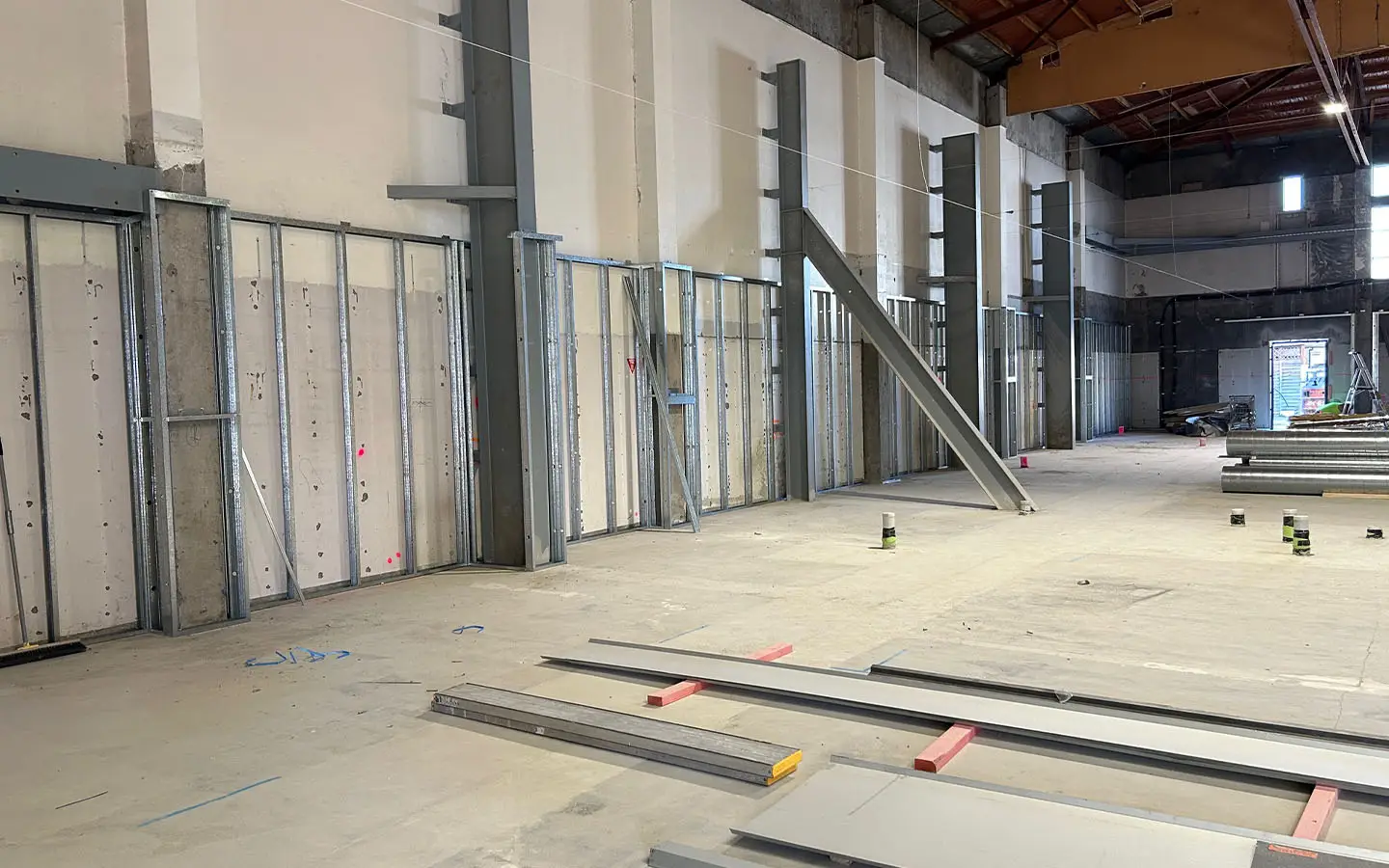
You combine them by designing all three alongside the structural solution, before anything goes to Council. When ceilings are down and walls are open for strengthening, adding sprinkler runs, upgraded stairs or accessible bathrooms costs far less than coming back later.
Brace frames can follow new corridor lines instead of cutting through the middle of a future tenancy. Ramps, lifts and accessible facilities can sit in the same consent as the structural work, and our guide to accessibility compliance for Christchurch commercial buildings covers what Council typically expects.
Tenant fit-outs belong in the same conversation. If a tenant wants an open-plan floor or a split into smaller suites, the engineer needs to know before the strengthening design is fixed.
Is Strengthening Always the Right Call?
No, strengthening only makes sense when the numbers still work after the full compliance picture is costed. A suburban Christchurch retail block may justify a complete upgrade, while a CBD distressed asset with major egress deficiencies might deliver better returns through repositioning or sale.
That decision should come before design fees, not after. A proper risk assessment weighs the cost of strengthening plus compliance against expected rental uplift, reduced vacancy and resale value.
Who Should Coordinate the Whole Project?
One accountable project lead should coordinate the engineer, designer, builder and Council from first assessment to handover. Seismic projects go over budget when each party sees only its own part of the building.
At Fitz Consulting, Paul and Nicola Fitzsimmons act as your single point of contact, managing due diligence, engineering briefs, consenting, construction and tenant liaison. That single line of accountability is how we turn problem buildings into productive commercial assets.
If your building has a low NBS rating, or you are unsure how the 2027 changes affect it, talk to us before you engage a builder. A plan costs a fraction of opening the building twice.